Tesla NACS vs. CCS: Which Charging Standard Will Dominate?
Introduction
The battle for EV charging supremacy is heating up. For years, CCS (Combined Charging System) was the dominant standard in North America—until Tesla’s NACS (North American Charging Standard) began gaining massive industry support.
Now, automakers like Ford, GM, Rivian, and Volvo are switching to NACS, while others remain committed to CCS. Which standard will win? We break down the technology, speed, reliability, and future outlook to find out.
1. What Are NACS and CCS?
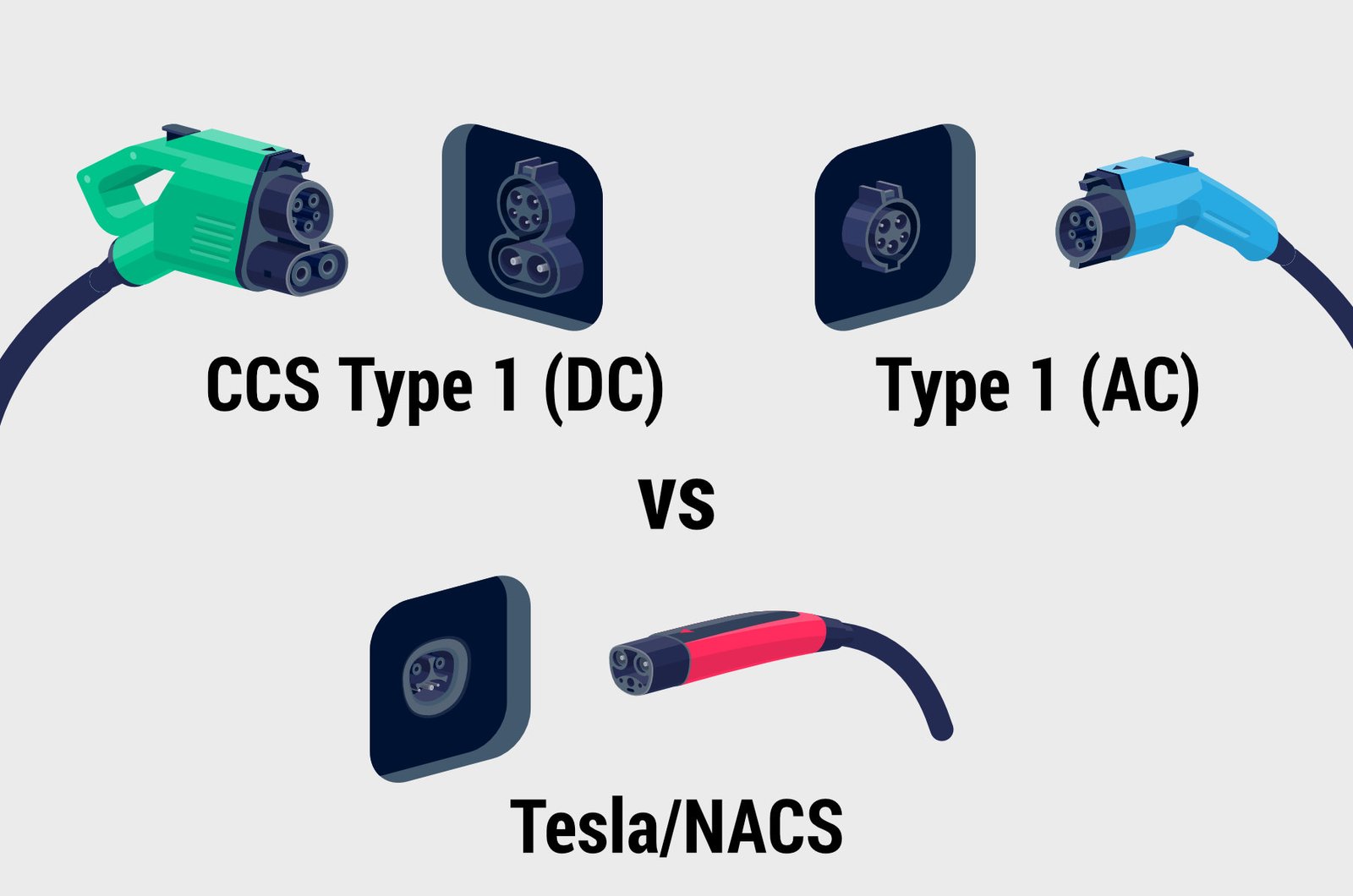
🔌 Tesla NACS (North American Charging Standard)
- Developed by Tesla in 2012, previously called the "Tesla Connector."
- Smaller, lighter plug (same port for AC and DC charging).
- Supports up to 1,000V and 500A (theoretical max: 500 kW).
- Used exclusively by Tesla until 2022, when Tesla opened it to other automakers.
🔌 CCS (Combined Charging System)
- Developed by multiple automakers (GM, Ford, VW, etc.) as an open standard.
- Two types:
- CCS1 (North America): Uses a J1772 plug + two DC pins.
- CCS2 (Europe): Uses a Type 2 plug + two DC pins.
- Supports up to 920V and 500A (theoretical max: 460 kW).
- Used by most non-Tesla EVs (Lucid, Rivian, Hyundai, etc.).
2. NACS vs. CCS: Key Differences
| Feature | Tesla NACS | CCS1 |
|---|---|---|
| Plug Size | Compact, one-piece design | Bulky, two-part design |
| Ease of Use | Easier to handle (lighter cable) | Heavier, harder to maneuver |
| Charging Speed | Up to 500 kW (V4 Superchargers) | Up to 350 kW (Electrify America) |
| Reliability | 99% uptime (Tesla Superchargers) | ~70-85% uptime (CCS networks) |
| Adoption | Tesla + Ford, GM, Rivian, Volvo | Most other automakers |
Why NACS Is Winning on Convenience
- One-handed operation: No need to push a heavy CCS plug into place.
- No adapter needed: Future EVs with NACS ports can use Superchargers natively.
- Supercharger reliability: Tesla’s network is far more dependable than CCS stations.
3. Who’s Switching to NACS? (And Who Isn’t?)
✅ Automakers Adopting NACS (2025+)
- Ford (2025)
- GM (2025)
- Rivian (2025)
- Volvo/Polestar (2025)
- Mercedes (2025)
❌ Automakers Sticking with CCS (For Now)
- Hyundai/Kia (waiting for 800V Supercharger support)
- Lucid (CCS-only for now)
- VW Group (Audi, Porsche) (still committed to CCS in the US)
The Big Exception: Europe
- CCS2 is mandatory in the EU, so Tesla uses it there.
- NACS won’t replace CCS2 in Europe.
4. Will NACS Replace CCS in North America?
Why NACS Will Likely Dominate
- 1.
Tesla’s Supercharger network is too good
- 12,000+ reliable chargers vs. CCS’s patchy reliability.
- Ford & GM switching means 60% of US EVs will use NACS by 2025.
- 2.
Smaller plug = better user experience
- No more struggling with clunky CCS connectors.
- 3.
Government support
- Tesla’s Superchargers are eligible for federal NEVI funding if they add CCS adapters.
Why CCS Might Survive
- Hyundai, Kia, and Porsche need 800V support (Tesla is working on it).
- Existing CCS infrastructure (Electrify America, EVgo) won’t disappear overnight.
5. What This Means for EV Owners
If You Have a CCS Car Today:
- 2024-2025: Use Tesla Superchargers with an adapter (Ford, GM, Rivian will provide them).
- Long-term: Future EVs will likely have NACS ports.
If You Buy a New EV in 2025+:
- Most new EVs will have NACS ports.
- CCS stations will still exist but become less common.
Should You Wait for NACS?
- If buying now: Get a Tesla or a Ford/GM EV with free adapter.
- If buying in 2025+: Most new EVs will be NACS-native.
Conclusion: NACS Is the Future (But CCS Isn’t Dead Yet)
The data is clear: NACS is winning the charging war in North America. With Ford, GM, and Rivian switching, Tesla’s standard is becoming the new norm.
Final Verdict:
- NACS advantages: Better reliability, easier plug, faster adoption.
- CCS disadvantages: Clunky design, slower rollout, reliability issues.
What’s next?
- Tesla V4 Superchargers (supporting 800V) will make NACS even stronger.
- Hyundai/Kia may switch once 800V support arrives.
Bottom line: If you’re buying an EV soon, NACS compatibility is a huge plus.
Which charging standard do you prefer? Share your thoughts in the comments!
(Sources: Tesla, Ford, GM, Electrify America, SAE International)
Want more EV insights? Subscribe to ColoredCar.com for the latest updates! 🚗⚡